Pilates vs Yoga: Which One Is Right for You?
Compare how each class feels, what it costs and where you could start.
| Compare | Pilates | Yoga |
|---|---|---|
| Movement | Repeat a movement with control. | Hold poses or flow with breath. |
| Effort | Steady the trunk as limbs move. | Balance and hold your weight. |
| First class cost | Example: $20 mat or $40 equipment. | $20 at the same studio. |
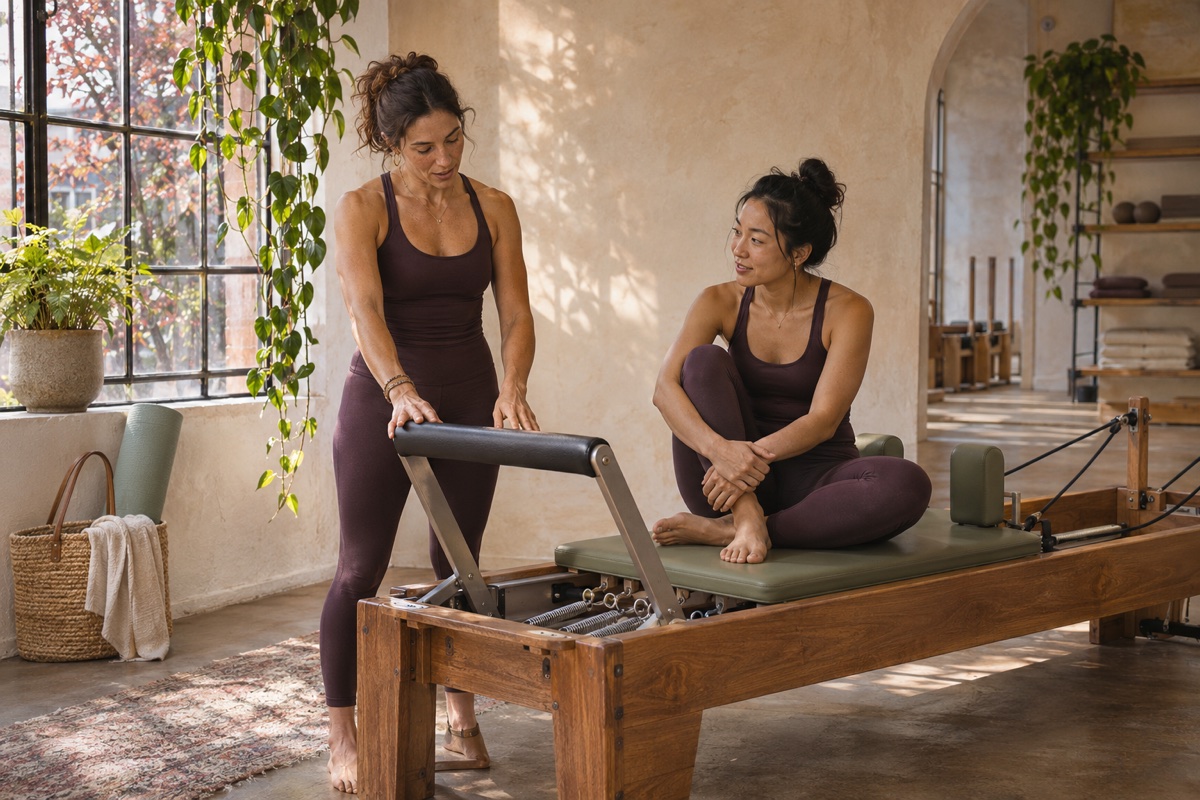
What is the difference between Pilates and yoga?
Imagine the teacher asks you to lie on your back and lift one foot off the floor. In a Pilates class, the next cue might be to notice whether your pelvis moved when your foot came up. You lower the foot, try the other side and have another chance to use the same instruction. In a yoga class, you might draw a knee toward you, settle into a twist and stay there for several breaths. Both teachers pay attention to movement and breathing. What they give you time to notice is different.
Read a class description as if it were a set of directions. Words such as “repeat,” “steady” and “springs” suggest a different hour from “hold,” “flow” and “rest.” The name alone can be misleading. A brisk yoga flow can ask a lot of your arms; a Pilates foundations lesson may spend its first minutes on one quite small movement. If one description sounds appealing but vague, ask what students do during the opening ten minutes.
Picture the movements before you book
In mat Pilates, you may keep your upper body quiet while one leg moves away and comes back. The challenge can grow as the leg reaches farther, even when the exercise still looks small. That makes a mat class a good experiment if you enjoy trying the same instruction twice and noticing what changed. On a reformer, the sliding carriage adds another source of feedback. You feel when it starts, where it slows and whether you can guide it smoothly back. Read the mat vs reformer comparison if the machine is the deciding factor.
In yoga, picture a standing pose with one hand resting on a block. The teacher may let you adjust your feet, pause and notice your breathing before moving on. In another class, that pose could be one stop in a sequence that moves with each breath. If being able to watch first matters to you, look for “basics,” “gentle” or a description that explicitly mentions demonstrations. Our Hatha and vinyasa guide explains what those differences can feel like.
Three things beginners often wonder
Will I be the only person who needs to watch? Ask whether newcomers join a dedicated introduction or an open group. An introductory session should have room for learning the vocabulary, whether that means finding a footbar or understanding what the teacher means by a wider stance. You might prefer to be close enough to see a demonstration rather than trying to follow the person in front of you.
What if I am stiff or have little strength? Flexibility and strength are things you can explore in class. You can begin by asking about the positions used, the time spent on the floor and the adjustments the teacher can demonstrate. If you have new pain or a condition that affects exercise, a clinician can help you decide what activity is appropriate. The quiz helps with preferences and practical constraints. It cannot assess the cause of discomfort.
Will trying it mean buying equipment or a membership? Compare the charge for one visit with the money you actually have to spend today. A package with a low advertised rate may require several visits before it represents a saving. The example in the table uses one studio’s single-visit rate card: $20 for mat Pilates or yoga and $40 for group equipment. Other studios set their own prices. Check the mat policy and whether a studio requires grip socks. A free recording can be a way to discover a teaching style before paying for a visit. Compare class costs and first-visit fees.
Match your goal to the experience
If you want to work on control, look for a teacher who gives one precise cue and lets you repeat the movement. That can suit someone who wants to feel how their trunk responds when their arm or leg moves. If you want time to settle into a position, look for a yoga class that mentions supported poses and pauses for breathing. The benefits of Pilates and benefits of yoga guides explain what you might notice during practice and which changes take repeated visits.
Your most important constraint may be the one a teacher never sees. A recording that fits between work and dinner may be easier to repeat than a studio you can only reach on a perfect traffic day. On the other hand, if you learn by asking questions, a booked introduction with a teacher may be worth the journey. Looking for a class in NYC? Browse the beginner class directory.
Use the quiz to narrow your options
Take the Pilates or yoga quiz with an ordinary week in mind. Answer for the time you could reserve on a busy day and the amount you would actually spend on a trial. You can want both strength and a quieter hour. Your movement preference can help break the tie, and the result can suggest trying mat Pilates before a slower yoga session if both interest you.
Read the reason on the result card before choosing a listing. If the suggestion depends on having equipment you cannot use at home, revisit your setting or budget. If the suggested format sounds right but you want more help, use the beginner guide on the result to prepare a question for the instructor.
Make the first visit easy to repeat
Pick one introductory session, look up the arrival time and make sure the confirmation names a date and location. For a recording, check that you can see the screen while seated and lying down. Before you start, choose one thing to pay attention to: whether you understand the instructions, how the surface feels or whether there is time to ask a question.
Afterwards, write down one cue you would recognise next time, the time the whole visit took and what another visit would cost. Those details are a better guide to your next booking than how impressive a movement looked. If you would look forward to repeating the class on an ordinary week, you have a good reason to go back.
Questions before you begin
Which is easier to try as a complete beginner?
Look for a class that teaches the setup. Beginner mat Pilates can use a short sequence that repeats. A yoga basics teacher may pause to show a pose and how to change it. A reformer introduction gives you time to learn the equipment.
What is the biggest difference between mat and reformer Pilates?
On a mat the floor stays still. On a reformer a carriage slides against springs, so the instructor teaches you where to stand or lie and how to control its movement. Both formats use attention, repetition and breath.
Do I need to touch my toes to start yoga?
No. A beginner teacher can change the height of a support or the shape of a pose. Ask whether the class offers time to watch and adjust.
Is Pilates a type of yoga?
No. Joseph Pilates developed a distinct movement system. Yoga has roots in Indian traditions that include posture, breath and meditation. Sharing a mat or a familiar-looking shape does not make the practices identical.
Which should I try if I want strength and a quieter class?
Try a beginner mat class for controlled repetitions and a gentle Hatha class on another day for a slower, breath-led experience. Ask about the specific teacher’s pace before you decide which to repeat.
Can either class tell me how much weight I will lose?
A class label cannot predict a change in weight. Your overall activity, eating patterns and other individual factors matter. Choose an experience you can attend and want to repeat.
How much equipment do I need at home?
A clear space and a comfortable, nonslip surface are enough for many beginner recordings. Check the introduction to see whether the teacher uses a mat, block or other prop. Choose an equipment introduction in a studio if you want to try a reformer.
Can I try Pilates and yoga in the same week?
Yes. Put the session with the least flexible date on your calendar first. Leave room for travel or setup and give yourself a chance to see how you feel before adding the other practice.
What will the quiz result give me?
You get a suggested starting format, an explanation based on your answers and three steps for your first visit. You can change your answers to see how a different budget, location or movement preference affects the suggestion.